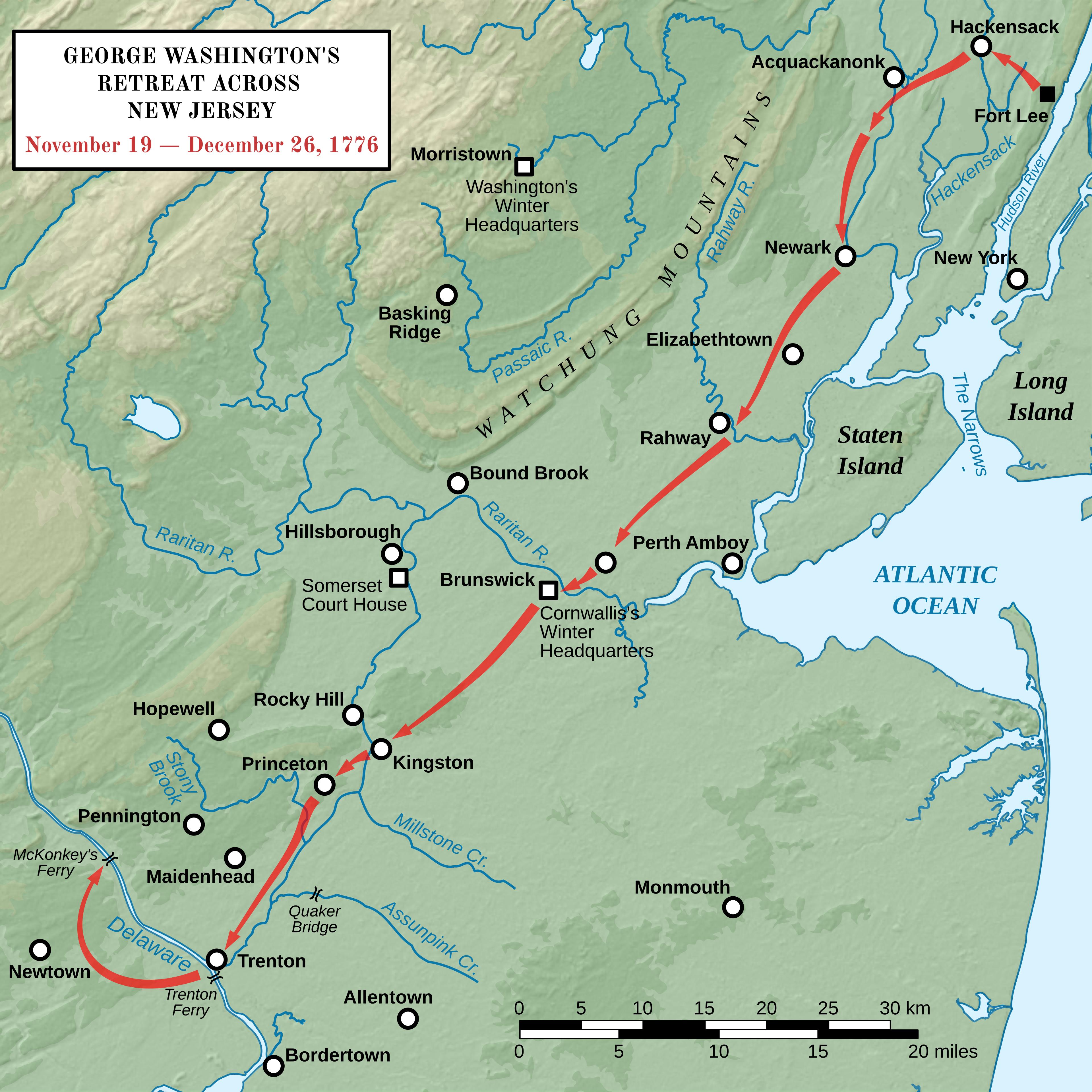
As November began, New Jersey Patriots were greatly concerned that things were not going well at all for the cause. The battles on Long Island, Harlem Heights on Manhattan Island, and at White Plains in Westchester County had not gone well and resulted in a huge decrease in manpower with General Washington. Still, at least some Trenton militiamen turned out for an additional one-month tour of active duty in November while rapidly developing events meant many would remain on duty for several months.
From the conflicting news getting to Trenton, residents feared military action would surely come to their town, the only question seemed to be when. After the late October Battle of White Plains, Colonel Joseph Phillips’s Five-Month Levy Regiment, containing multiple men from Trenton along with men known to Trentonians from Hopewell and Maidenhead (today’s Lawrenceville) townships, was at Phillipsburg in Westchester County, New York in a depleted and fragmented condition. The families of these men were often interconnected and all of them had ties to Trenton businesses and churches.
At a council of war with his officers, Washington concluded that British General Howe would continue the 1776 campaign. He believed that Howe needed to make additional moves before going into winter quarters “on account of his reputation” that was suffering because “what has he done yet with his great Army?” Howe had repeatedly defeated Washington’s force on the battlefield but had not forced it to surrender and end the rebellion. One of his options would be to invade the rich farming areas of northeastern New Jersey before winter settled in. Other options would be to move up the Hudson River Valley to clear it of American forces or attack New England. Anticipating one of these likely British movements, Washington split his army, now stationed in West Chester County, New York, into four parts. He wrote to Governor Livingston and to General Greene at Fort Lee on November 7 warning of the possible British invasion of New Jersey and advising them that he could not send over his entire force from West Chester County to defend the state because he needed troops to guard against any British movement up the Hudson River Valley or into New England.
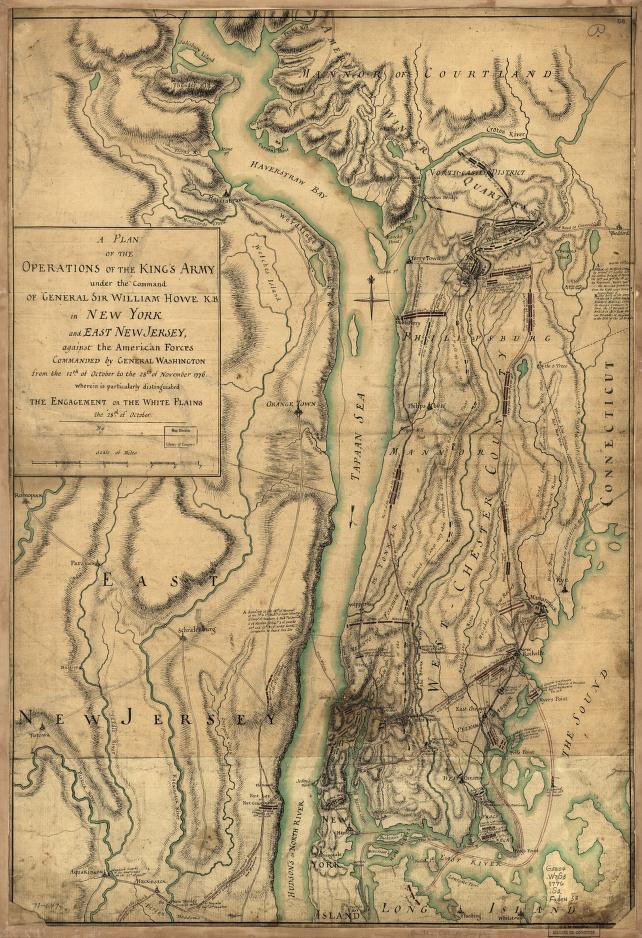
Washington was among those military and political leaders convinced that the British would target Philadelphia in the next year’s campaign and New Jersey must be ready to oppose and inhibit their march to it. The British route through New Jersey would most likely bring them through Trenton. Not only should New Jersey get its militia companies in order, but leaders should also warn farmers to be prepared “to drive off their Wagons, Teams, and Stock that neither of them may fall into the hands of the enemy.” He warned that the farmers may “rely on it that the Enemy will leave nothing they find among them, nor do they distinguish between Whig & Tory. Woeful experience has convinced the latter in the movements of the Enemy in this State of this Truth.”
With this in mind, the one move Washington made was into New Jersey with at least some of his troops. He decided to personally lead only about two thousand men, including Continental troops from the states south of the Hudson River and Heard’s Five-month Levy Brigade with Colonel Joseph Phillips’s regiment and its men from Hopewell, Maidenhead, and Trenton Townships.
This force would head for New Jersey where he expected to be reinforced with men from the Flying Camp and the New Jersey militia, including the troops currently stationed at Forts Washington and Lee under the command of General Greene. This would give him a core of about 5,000 men after the expected addition of 3,000 or so troops from the Hudson River garrisons of Fort Washington and Fort Lee. He would leave roughly 3,000 troops under General William Heath in Westchester County to defend the Hudson Highlands and over 7,000 troops under General Charles Lee at North Castle. Lee was charged to act appropriately after Howe made his campaign plan clearer and either prevent a British move into New England or bring his force to New Jersey and work with Washington to confront any British movement here.
Governor Livingston notified Washington that he was warning people to move grain, and other products out of the way to preserve them and frustrate the British, while also working with the Assembly to ready the militia. However, if he needed to call the militiamen out “whether they will obey the orders, God only knows; and they will be worth but little if they do, I experimentally know” from having commanded them before becoming governor.
Fears about how the war was proceeding and strengthening the Tories must have been great in Trenton as November began. On November 4, “A Friend to American Freedom” at Trenton wrote a letter to the editor of The Pennsylvania Evening Post noting the efforts by New York Loyalists to reestablish the old colonial constitution of New York and make peace with England, something he considered a “breach or attempt of the utmost importance to the peace and well-being of every State.”
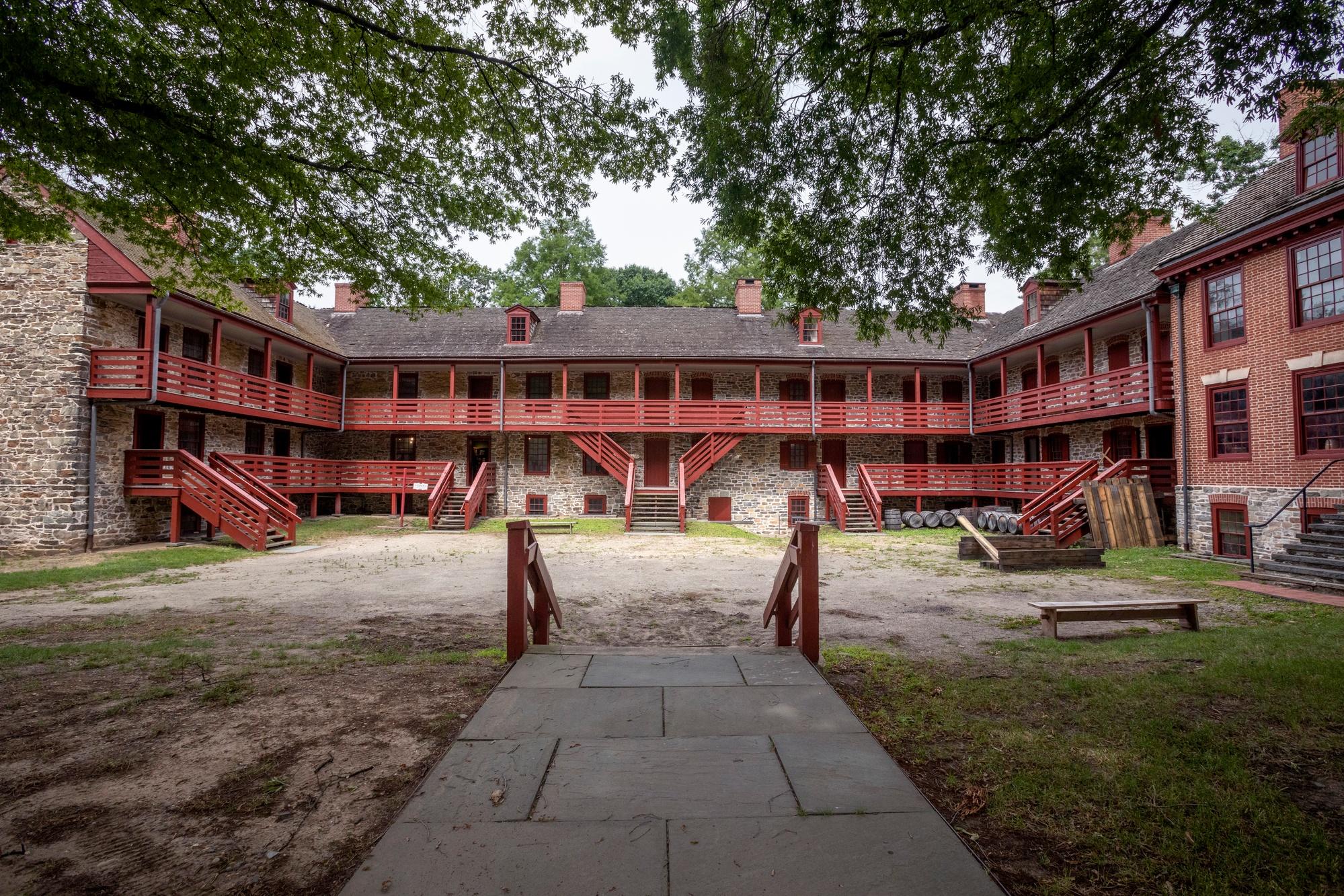
While Washington was losing troops to disease, injury, and desertion, additional American troops from southern states continued to land at Trenton Ferry and pass through Trenton on their way to join with Washington. The Continental Congress Board of War ordered General Adam Stephen and his Virginia brigade to Trenton in late October. Because so many men of the New Jersey militia failed to turn out in early November, Washington sent eight of the Continental regiments to the region between Amboy and Elizabethtown to guard against British incursions from Staten Island. On November 8, the three recently arrived Virginia regiments under General Adam Stephen were ordered to Amboy and Stephen replaced General Hugh Mercer in local command of the Flying Camp troops defending the state. When General Stephen set off to join the main army, he left behind some 324 sick and convalescent men in the military hospital at Trenton. That hospital was one of half a dozen established in New Jersey that summer and fall, and patients had begun to arrive in August. Just what building, or buildings, contained the hospital at this point is not known, but it may have been the barracks along with several additional buildings.
While the exact threat to New Jersey and its timing were unclear, it is probable that the people of Trenton heard news daily from riders coming through town on commercial or governmental business. Local militiamen going to or from the northeast parts of New Jersey might also bring news.