
Today, One West State Street stands as one of downtown Trenton’s most visually commanding structures. Its stone façade rises with a kind of deliberate confidence, the Corinthian columns lifting the eye upward before you even step inside. The bronze doors, heavy and ornate, feel like they were cast for a different era; an era when banks were temples and architecture was meant to communicate stability, prosperity, and civic pride. Inside, the space now known as The Reserve gleams with polished marble, vaulted ceilings, and the kind of proportions that make people instinctively slow down and take in the room. Weddings, galas, and civic gatherings now fill a hall once devoted to ledgers and vaults, and the building has become one of downtown’s most elegant examples of adaptive reuse.
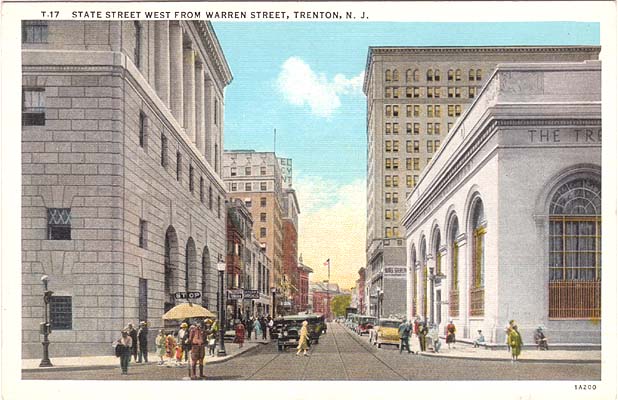
But the grandeur of One West State Street is only the latest chapter in a story that stretches back nearly three centuries. To understand the building’s significance, you have to imagine the ground beneath it, not just the stone and steel of the current structure, but the layers of history that came before. This corner of West State Street has been a seat of power, a financial anchor, a gathering place, and at one point, the center of national governance. Few addresses in New Jersey carry as much historical weight.
Long before the current building rose in 1930, the site held a colonial residence built in 1730. Between 1740 and 1742, it served as the home of Royal Governor Lewis Morris, placing the property at the heart of New Jersey’s political life during a period when the colony was still defining its identity and its relationship to the Crown. The house was substantial enough to be adapted over time, and by 1784, its first floor had been transformed into a single grand chamber known as “The Long Room.” That room would become one of the most important civic spaces in early American history.
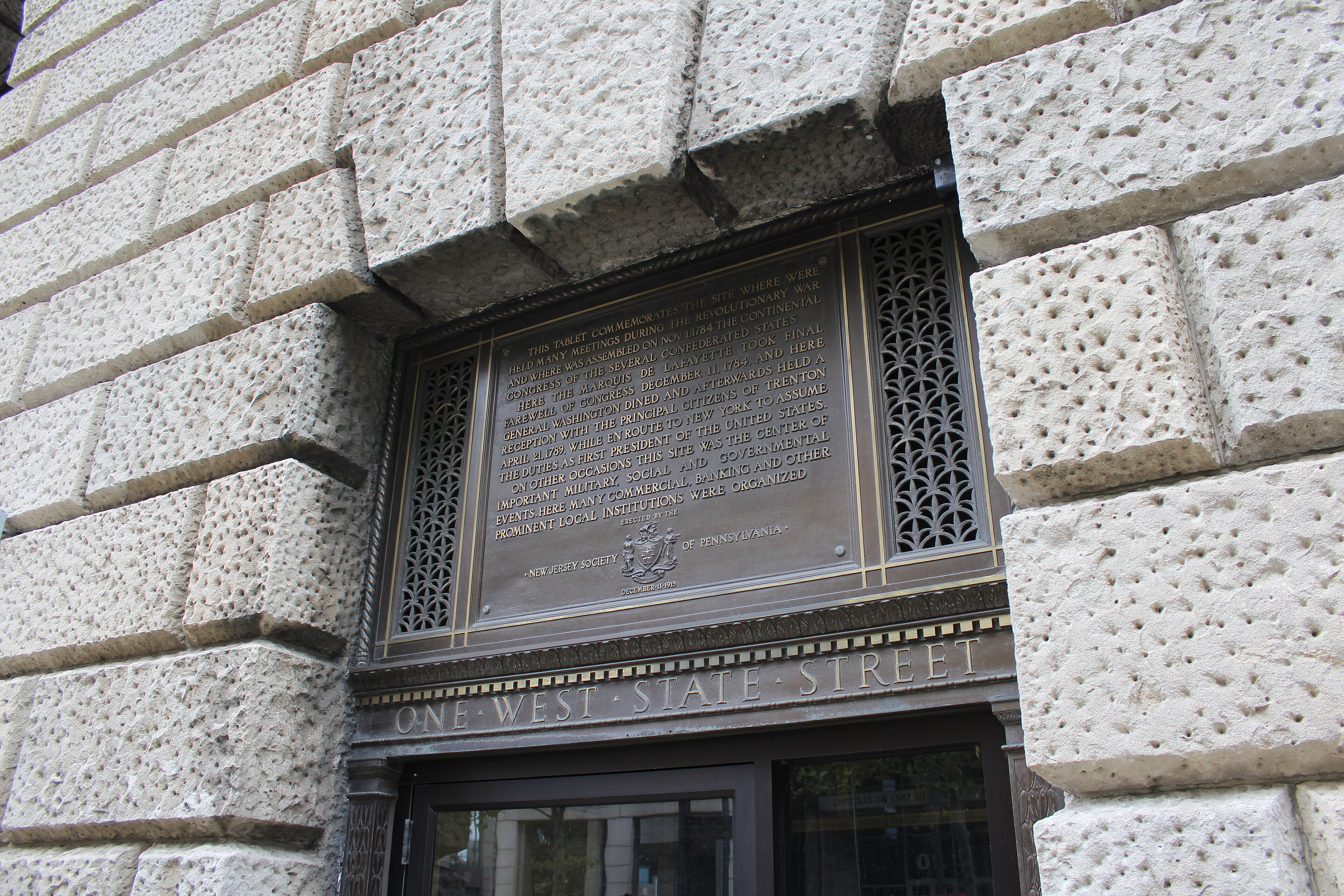
In 1784, Trenton briefly became the nation’s capital, and The Long Room hosted sessions of the Confederation Congress. Delegates debated the future of a young nation still finding its footing, and it was in this room that New Jersey ratified the United States Constitution. For a short but meaningful period, the most consequential conversations in America were happening on this very block. The site’s connection to the birth of American governance is not a footnote, it is a foundational part of Trenton’s identity as a place where national history unfolded.
The original building was demolished in 1837, ending more than a century of political and civic use. In its place rose the First Mechanics and Manufacturers Bank, one of the earliest financial institutions in a city rapidly becoming an industrial powerhouse. Trenton’s factories were booming, its workforce expanding, and its banks were symbols of confidence and growth. The site shifted from political leadership to economic leadership, reflecting the city’s evolution.
That lineage set the stage for the building we see today. In 1930, the bank commissioned the New York architectural firm York & Sawyer, masters of monumental Beaux‑Arts bank design, to create a new headquarters. York & Sawyer were known for designing banks that looked like civic monuments, and One West State Street is no exception. The building’s classical symmetry, towering columns, and carved stone capitals were meant to project permanence. Banks of this era were built to reassure depositors that their money was safe, and the architecture itself was part of that message. The arched windows soften the building’s muscular geometry, while the stone façade creates a sense of gravitas that still resonates nearly a century later.
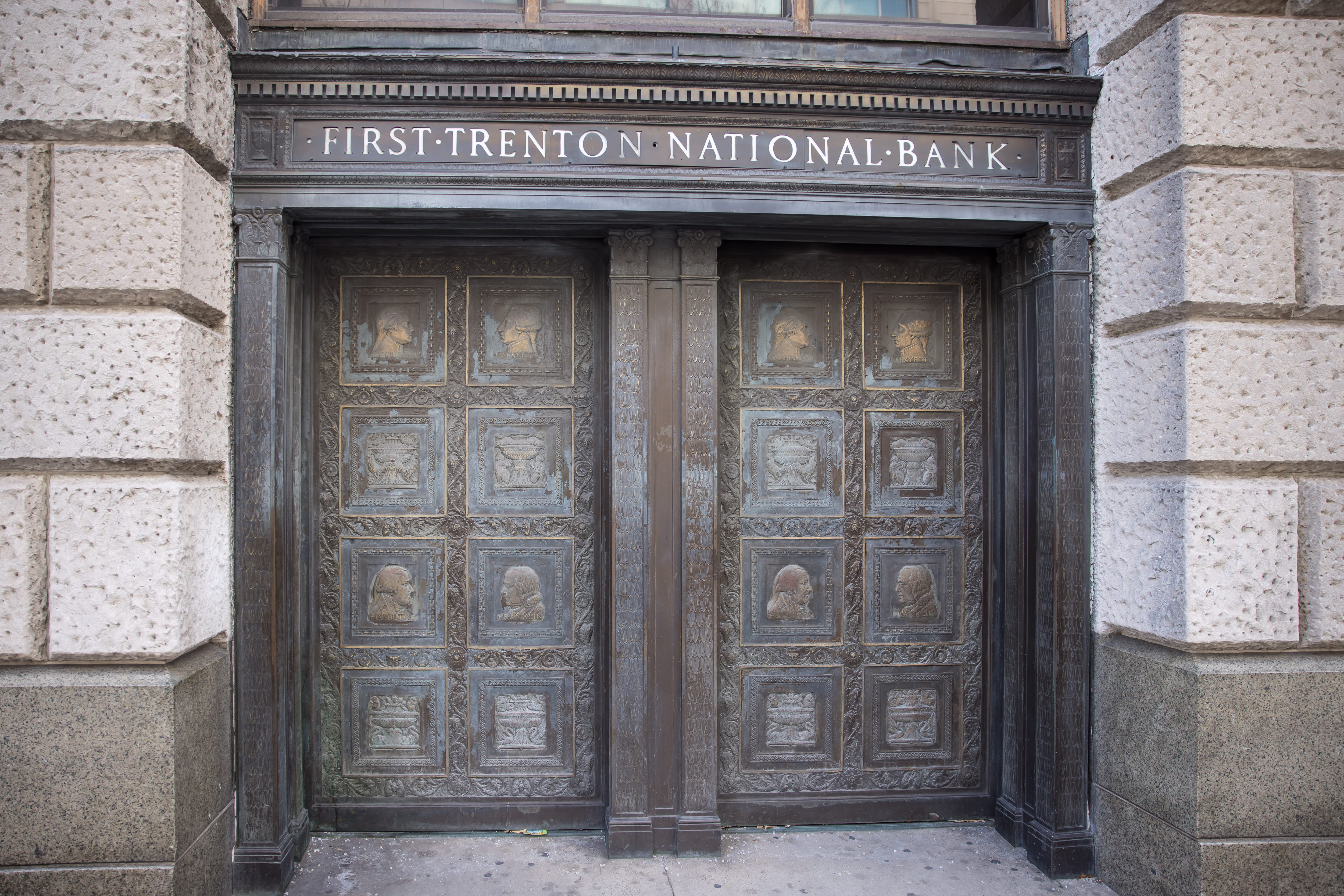
The details of the building tell their own story. The bronze entrance doors are decorated with bas‑relief portraits, symbolic figures representing commerce, industry, and civic virtue. They are the kind of doors meant to be opened by people making consequential decisions. Above the entrance, the stone lintel still reads “First Trenton National Bank,” preserving the building’s identity even as its uses have changed. The façade is a textbook example of Beaux‑Arts craftsmanship, with symmetrical pilasters, carved capitals, and a disciplined rhythm of windows and stonework. Inside, the former banking hall retains its grandeur, with marble floors and soaring ceilings that create a sense of ceremony.
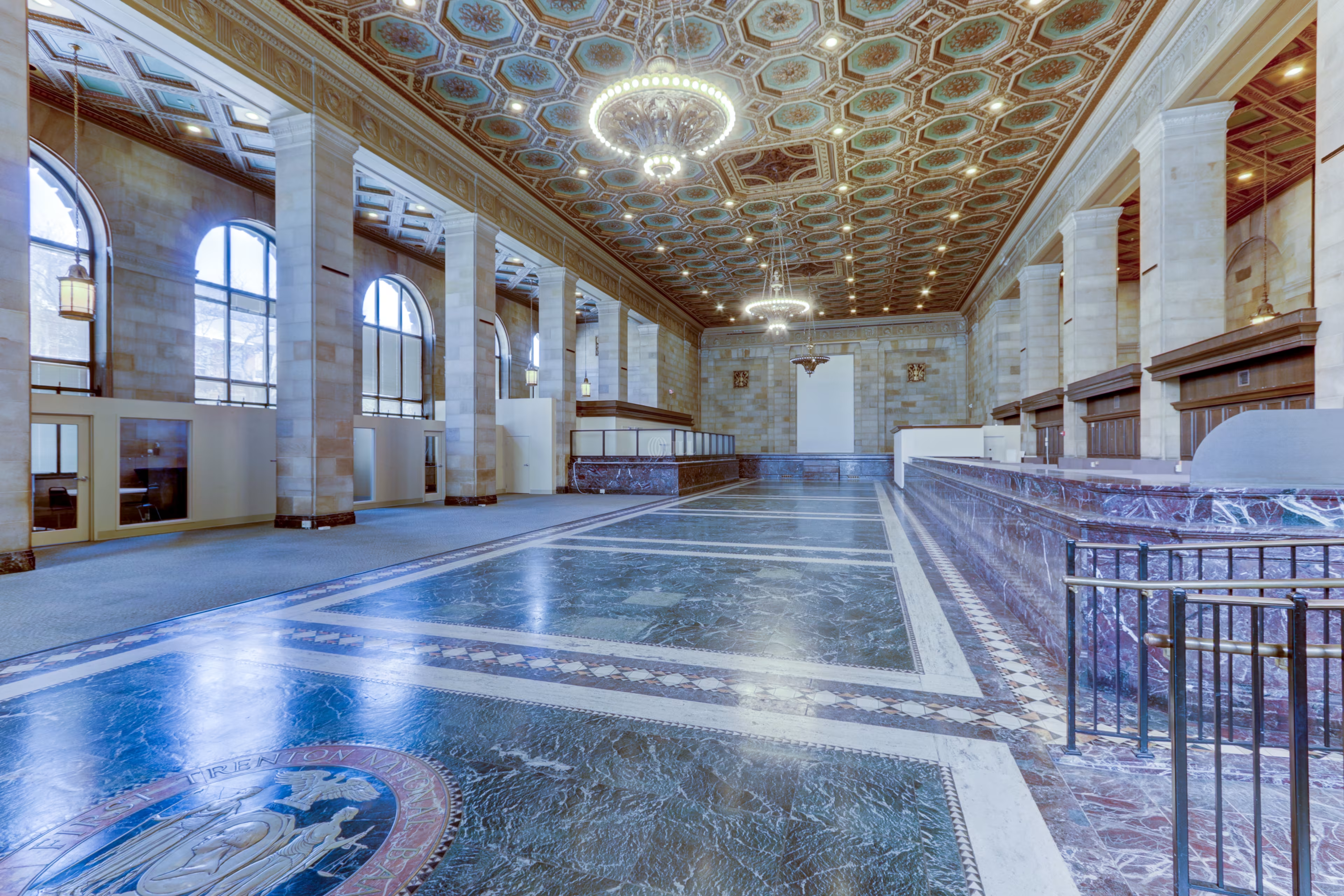
Today, One West State Street has been reborn as The Reserve, a luxury event venue that embraces the building’s architectural drama. The transformation is fitting. Within the upper floors of the building are tech, government and non-profit companies. One West is home for Maestro Technologies, the Father Center, NJNetwork and the New Jersey Innovation Authority. The property has been owned and operated by One West Development LLC. For information on the reserve follow this link: https://reserveonwest.com

For nearly 300 years, this corner of downtown has been a place where people gather, first to govern, then to bank, now, to operate tech and non-profit companies as well as to celebrate. The building’s new life continues its long tradition of civic engagement, public ceremony, and architectural prominence.
One West State Street is more than a landmark. It is a timeline. A reminder that downtown Trenton has always been a place where history happens, and where the future keeps finding new ways to move in.