
Look up as you travel Warren Street through downtown Trenton and you can't miss him.
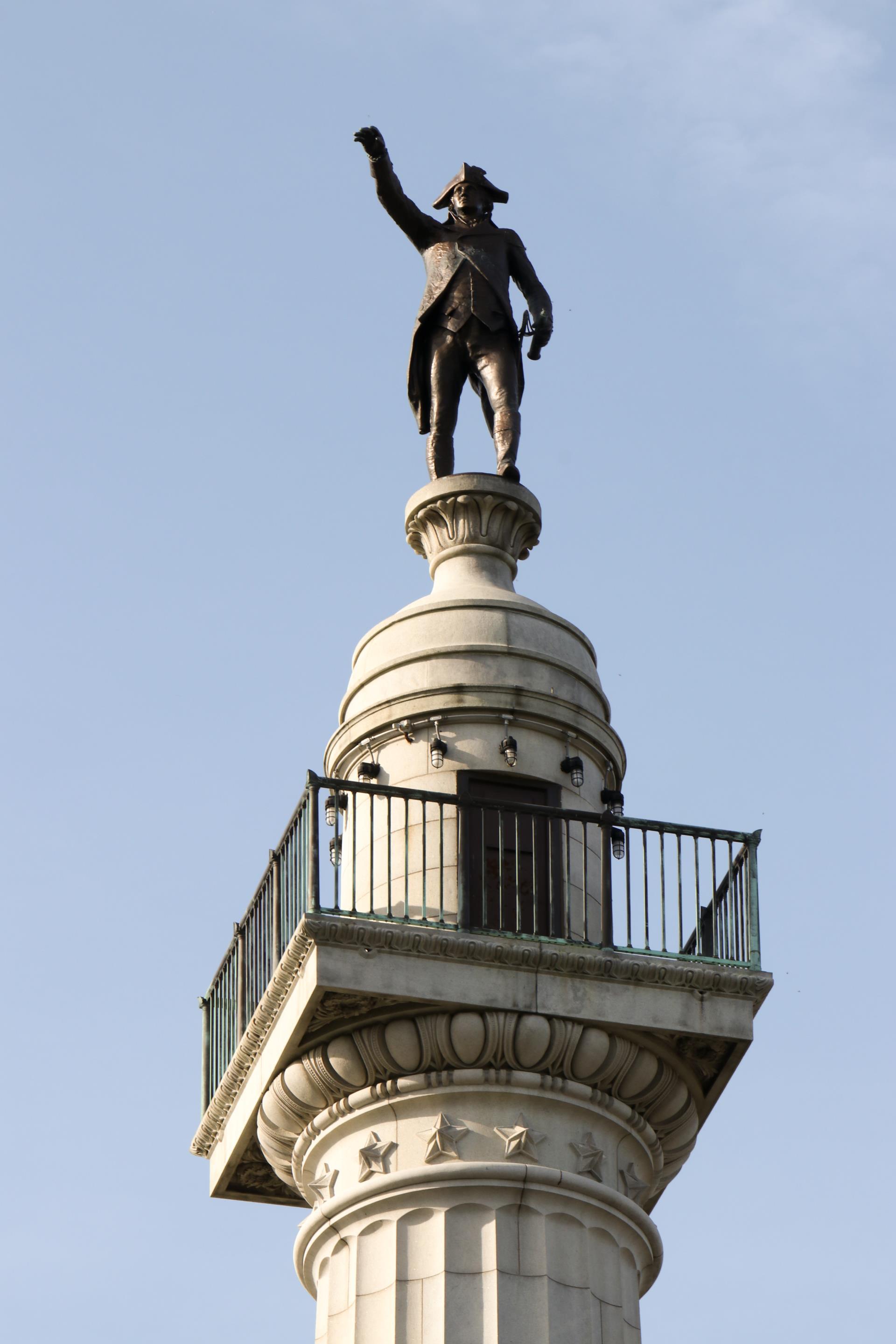
George Washington stands high above the city, arm outstretched, pointing down the street as if the battle were still unfolding below. It's a dramatic image. But here's what makes it remarkable: Washington isn't pointing toward some distant battlefield. He's standing above it.
The Trenton Battle Monument marks the ground where American artillery was positioned during the Battle of Trenton, a victory that helped breathe new life into a revolution struggling for survival.
The monument marks the location where American artillery was positioned at the head of King and Queen Streets, today's Warren and Broad streets, during the Battle of Trenton on December 26, 1776. From this position, the cannons commanded two of Trenton's principal north-south streets. [dep.nj.gov]
That makes the monument something more than a memorial to history. It marks a place where history actually happened.
To understand the monument, you first have to understand just how important Trenton was.
By December 1776, the American Revolution was in serious difficulty. After setbacks around New York, the Continental cause desperately needed success. The American Battlefield Trust describes Trenton as the beginning of the "Ten Crucial Days," a series of victories that revived American morale and demonstrated that the British military could be defeated. [battlefields.org]
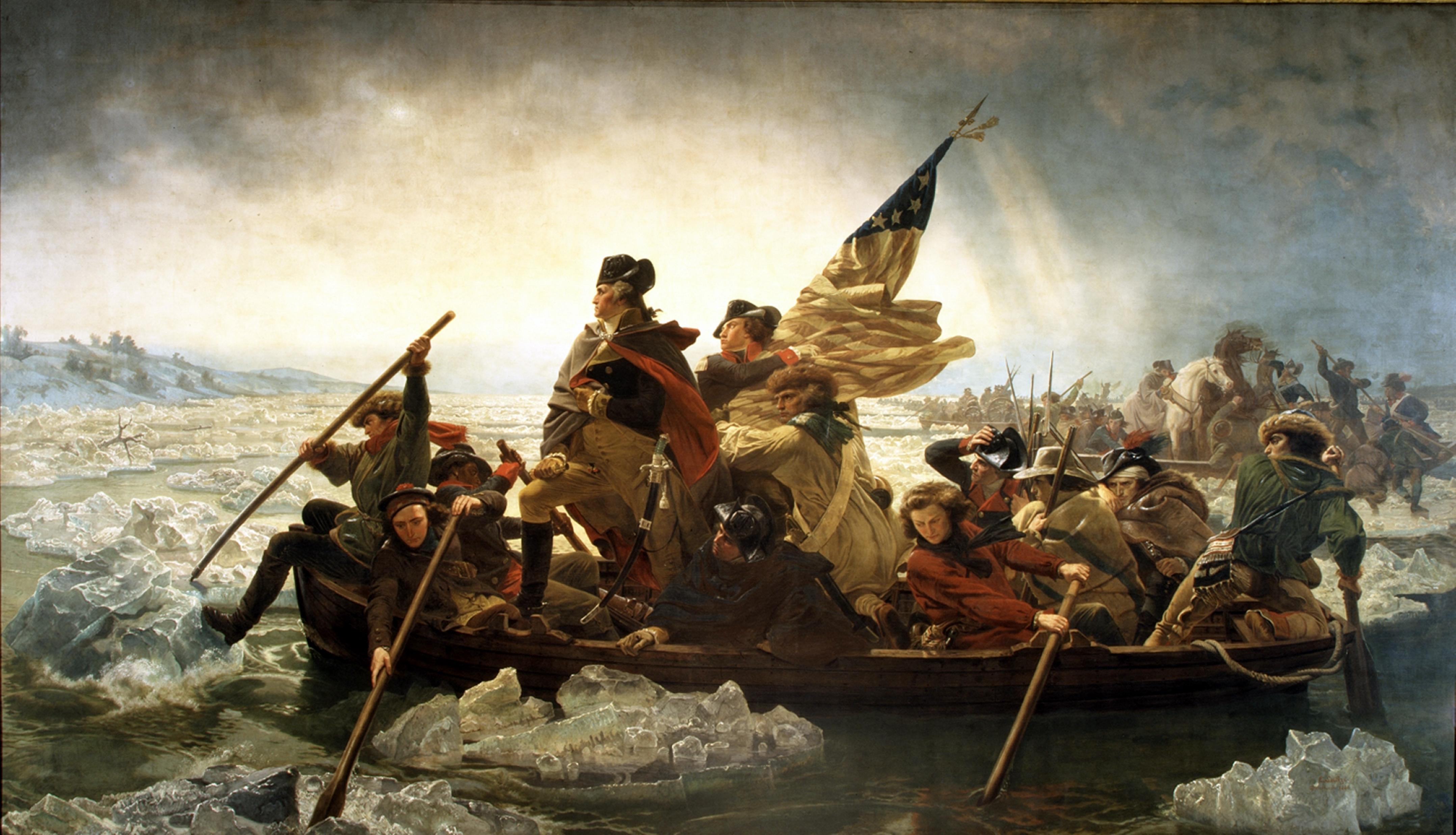
Then came Christmas night. George Washington and his army crossed the Delaware River, marched approximately nine miles through a winter storm and attacked the Hessian forces stationed in Trenton at about 8 a.m. on December 26. After a short battle, Washington had secured his first battlefield victory. [dep.nj.gov]
Its psychological importance was enormous. The New Jersey Department of Environmental Protection notes that the victory boosted morale both in the Continental Army and in the fledgling nation and has often been credited by historians as a turning point in the War for Independence. Its effect was felt across the Atlantic as well. In 1779, Britain's colonial secretary told Parliament that "...all our hopes were blasted by that unhappy affair at Trenton." [dep.nj.gov]
It is difficult to imagine a stronger description of Trenton's importance coming from the other side.
More than a century later, Americans decided that this ground deserved a monument commensurate with what had happened there. The cornerstone of the Trenton Battle Monument was laid on December 26, 1891, exactly 115 years after the battle. The completed monument was formally dedicated on October 19, 1893, deliberately coinciding with the anniversary of the British surrender at Yorktown. [dep.nj.gov]
The result was meant to be monumental in every sense. The National Register nomination describes it as a granite Roman Doric triumphal column approximately 150 feet high. The column rises to an observation platform and is crowned by a statue of George Washington. [npgallery.nps.gov]
Washington is not portrayed passively.He is directing the battle.
His extended arm points down what was King Street, now Warren Street, the direction in which American artillery fired during the engagement. The National Park Service documentation identifies sculptor William R. O'Donovan as the creator of the Washington figure. [npgallery.nps.gov]
Even the base tells the larger story. Bronze reliefs depict Washington's army crossing the Delaware, the opening of the battle and the surrender of the Hessians. The works were associated with prominent artists including Thomas Eakins and Karl H. Niehaus; reproductions now appear on the monument while the originals are housed at the New Jersey State Museum. [dep.nj.gov]
Flanking the entrance are bronze figures representing John Russell of the 14th Continental Regiment and Blair McClenachan of the Philadelphia Troop of Light Horse. [dep.nj.gov]
The monument itself was designed by architect John H. Duncan, who also designed Grant's Tomb in New York. [dep.nj.gov] It is therefore not simply a marker of one important battle. It is a major late-19th-century work of American commemorative architecture and art. The National Park Service lists the monument on the National Register of Historic Places, where its significance includes architecture and art. [npgallery.nps.gov]
Two centuries of urban development have changed much of the landscape over which the battle was fought. Streets were rebuilt, buildings went up and generations of Trentonians turned a Revolutionary-era town into a modern state capital.
But the geography of the story is still here. The American Battlefield Trust notes that although much of the original battlefield is now occupied by the modern city, important historic places survive, including the Trenton Battle Monument and Old Barracks Museum. [battlefields.org]
That gives downtown Trenton something relatively few American cities can claim. The Revolutionary story here isn't confined behind museum walls.
It is embedded in the street grid.
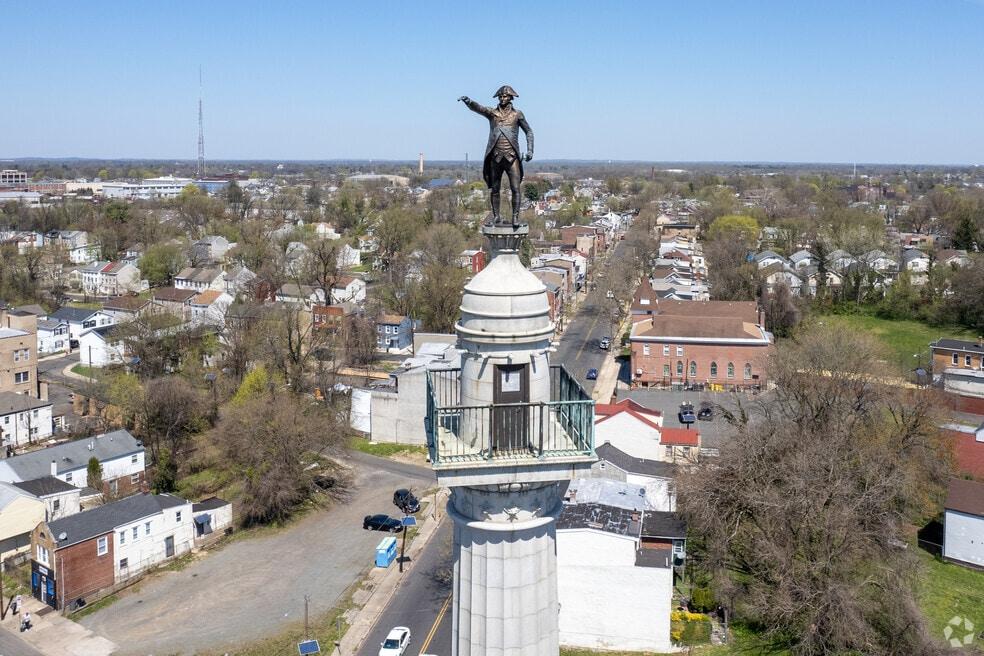
Warren Street is not merely a downtown commercial street. It follows the corridor down which Washington's artillery was directed. Broad Street is not simply another way through the city. It was Queen Street when the battle unfolded.
And the towering Washington at the Battle Monument is not pointing symbolically toward some distant battlefield. He is pointing into Trenton.
Perhaps that is what makes the Trenton Battle Monument especially important today. It asks us to look up, both literally and historically.
For people who pass it regularly, it can become part of the scenery. Yet the monument stands as a reminder that the streets of Trenton once became the stage for events whose consequences stretched far beyond New Jersey.
The victory here did not end the Revolution. But it restored momentum to a cause that badly needed it and helped demonstrate that the Continental Army could prevail. [dep.nj.gov], [battlefields.org] More than 130 years after the monument's dedication, Washington still stands above Warren Street, arm outstretched over the city.
And perhaps that is the most powerful thing about the monument.
It doesn't merely tell us that American history happened in Trenton. It shows us exactly where.
Want to get closer to the story? Patriots Week lets you watch the Battles of Trenton unfold again on the city's historic streets. The Revolutionary Mile lets you run them yourself, alongside friends and teammates, surrounded by a city celebrating the history that helped change America. In Trenton, you don't just visit history. You can stand in it, watch it, and run through it.