
For more than a century, Trenton has been a city shaped by movement. Long before highways and commuter rail defined regional travel, electric trolleys stitched together neighborhoods, business districts, and nearby towns, creating one of New Jersey’s most dynamic early transportation networks. Today, as communities across the country rediscover the value of historic corridors, Trenton’s trolley story is finding new life through an ambitious vision: completing and revitalizing the Johnson Trolley Line as a continuous, modern trail that reconnects the capital city to its past and to its future.
A City Built on Rails and Wires
Trolley service arrived in Trenton in the late 1800s, transforming daily life almost overnight. Electric streetcars made it possible for workers, students, and families to travel quickly and affordably between Trenton, Princeton, Hopewell, Pennington, Lawrenceville, and New Brunswick. These routes were more than transportation, they were engines of growth. Commercial corridors like Hanover Street, Brunswick Avenue, and Princeton Avenue flourished along trolley rights‑of‑way, and neighborhoods expanded around the convenience of reliable transit.
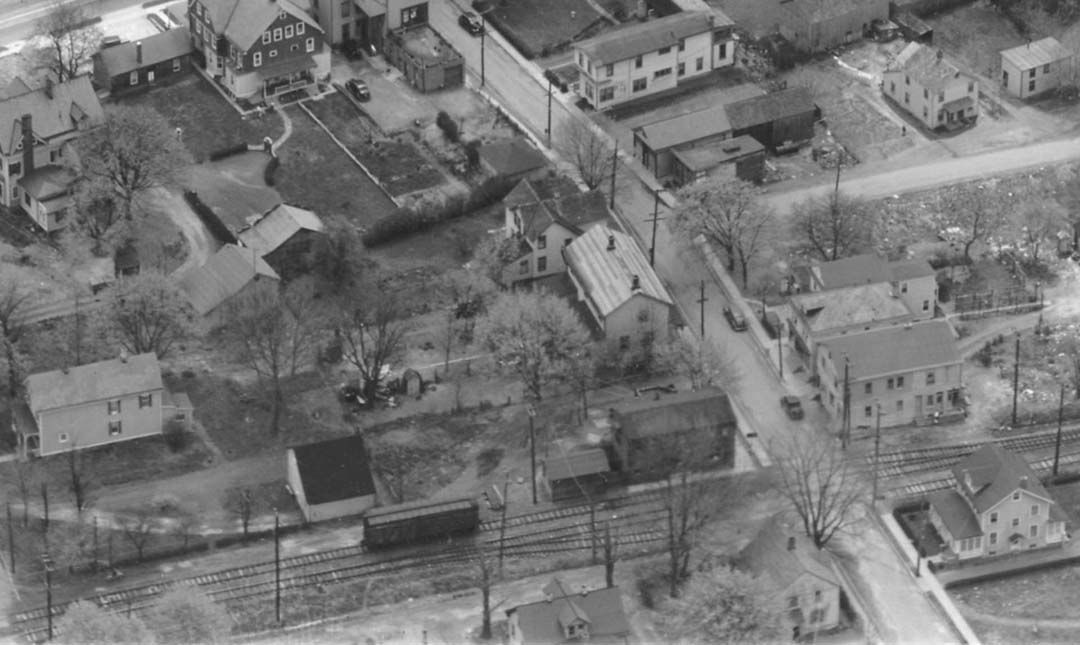
One of the most iconic routes was the Trenton–Princeton Traction Company’s “Fast Line,” known for its dark green cars, yellow trim, and speeds that reached an impressive 40 miles per hour. It carried commuters, college students, and even the occasional dignitary, local lore holds that Governor Woodrow Wilson once rode the line and handed pennies to children along the way. Other lines, including the Trenton & Mercer County Traction Company and the Trenton & New Brunswick Railroad Company, extended the city’s reach even further, linking Trenton to the broader Philadelphia–New York corridor. The Johnson Trolley began operating in 1902 and in its peak year of 1921 carried 1.6 million fares. The Johnson Trolley Line was purchased in 1929 by the Reading Railroad, which ran local freight service until 1973, when the new interstate cut off access to the line. During WW2, passenger service was stopped and never returned.
By the 1930s, buses and automobiles began to replace trolley service, and by mid‑century, most lines had ceased operation. But the physical imprint of the trolley era never disappeared. Rights‑of‑way remained visible in the landscape, and the Johnson Trolley Trail—named for the corridor that once carried streetcars north from Trenton endured as one of the most intact remnants of that history.
A Corridor Reborn
In recent decades, portions of the historic Johnson Trolley Line have been transformed into multi‑use trails, offering safe, off‑street routes for walking, running, and cycling. These segments have quickly become beloved community assets. Families use them for weekend outings, runners rely on them for training, and residents appreciate the chance to move through their neighborhoods without navigating busy roads.
While the construction of I-295 in the early 70s increased automotive mobility, it cut off pedestrian and cyclist access in the heart of Mercer County. Since at least 2014, municipalities, Mercer County, and enthusiasts have supported building a dedicated bike-ped bridge spanning I-295 to reconnect Mercer County communities.
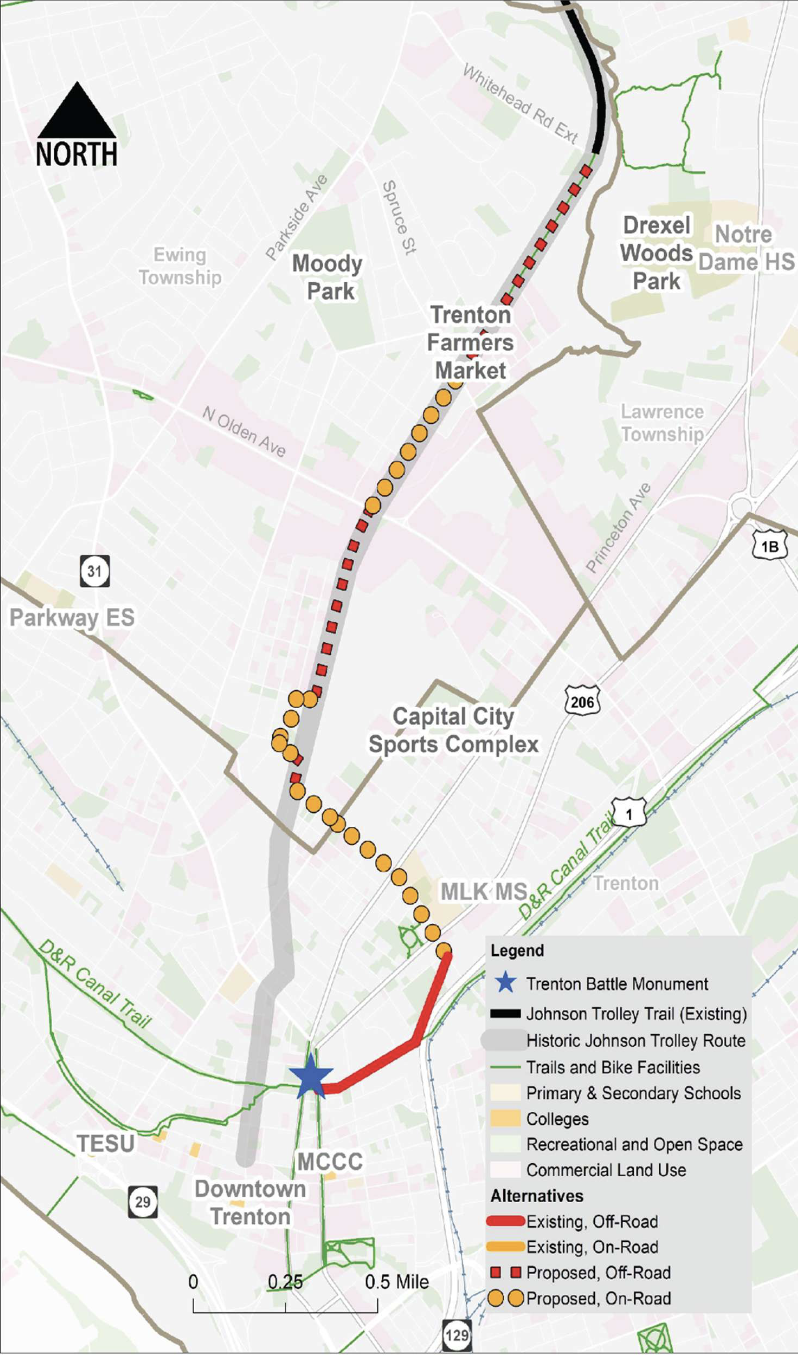
In 2025, Mercer County published an engineering study defining the Johnson Trolley Trail Corridor (JTTC), a safe multi-use trail reconnecting Trenton, Ewing, Lawrence, and Princeton, connecting the south and north approaches to the proposed bike-ped bridge. The Commissioner of NJDOT in 2025 publicly committed to building the bike-ped bridge, committing substantial funds in the state transportation plan on an accelerated basis
The JTTC would serve as a connector linking parks, schools, residential areas, and commercial districts. It demonstrates how historic infrastructure can serve modern needs, providing mobility options that are healthy, sustainable, and accessible to people of all ages.
Yet the JTTC is still far from complete. Several gaps remain, especially as the corridor approaches Trenton. Some sections are overgrown, inaccessible, or interrupted by development patterns that emerged long after the trolleys stopped running. Completing the trail into the city would create a continuous north‑south spine through Mercer County, linking Trenton to Lawrence, Ewing, and Princeton in a way that supports recreation, commuting, and economic development.
Why Trenton Needs the Johnson Trolley Line Completed
Redeveloping the Johnson Trolley Trail in Trenton is not simply a trail project, it’s a strategic investment in the city’s future.
A Vision That Requires Collaboration
To bring the JTTC fully into Trenton, collaboration is essential. Municipal leaders, county officials, nonprofit organizations, neighborhood groups, and property owners all have roles to play. Completing the trail will require coordinated planning, investment, and advocacy. It will require clearing obstacles both physical and bureaucratic and embracing a shared commitment to creating a safe, continuous, and welcoming corridor.
Fortunately, momentum is building. Residents increasingly recognize the value of the trail. Local organizations see its potential to support recreation and economic development. Regional planning efforts, including Mercer County, have begun to prioritize multi‑use corridors as key components of future mobility. The Johnson Trolley Line is no longer a forgotten remnant of the past; it inspires a project with broad support and clear relevance to the present.
A Path Forward
With thoughtful design, community engagement, and sustained leadership, the JTTC can become one of Trenton’s most cherished public assets: a place where history meets modern mobility, where neighborhoods connect, and where people of all ages can move safely and freely.
Trenton’s trolley system once carried thousands of people every day, shaping the city’s growth and identity. Today, the JTTC offers a chance to reclaim that legacy not with streetcars, but with a vibrant, accessible, and enduring pathway that honors the past while building a healthier, more connected future.
https://johnsontrolleytrail.org/