
There is something remarkable about a live orchestra.
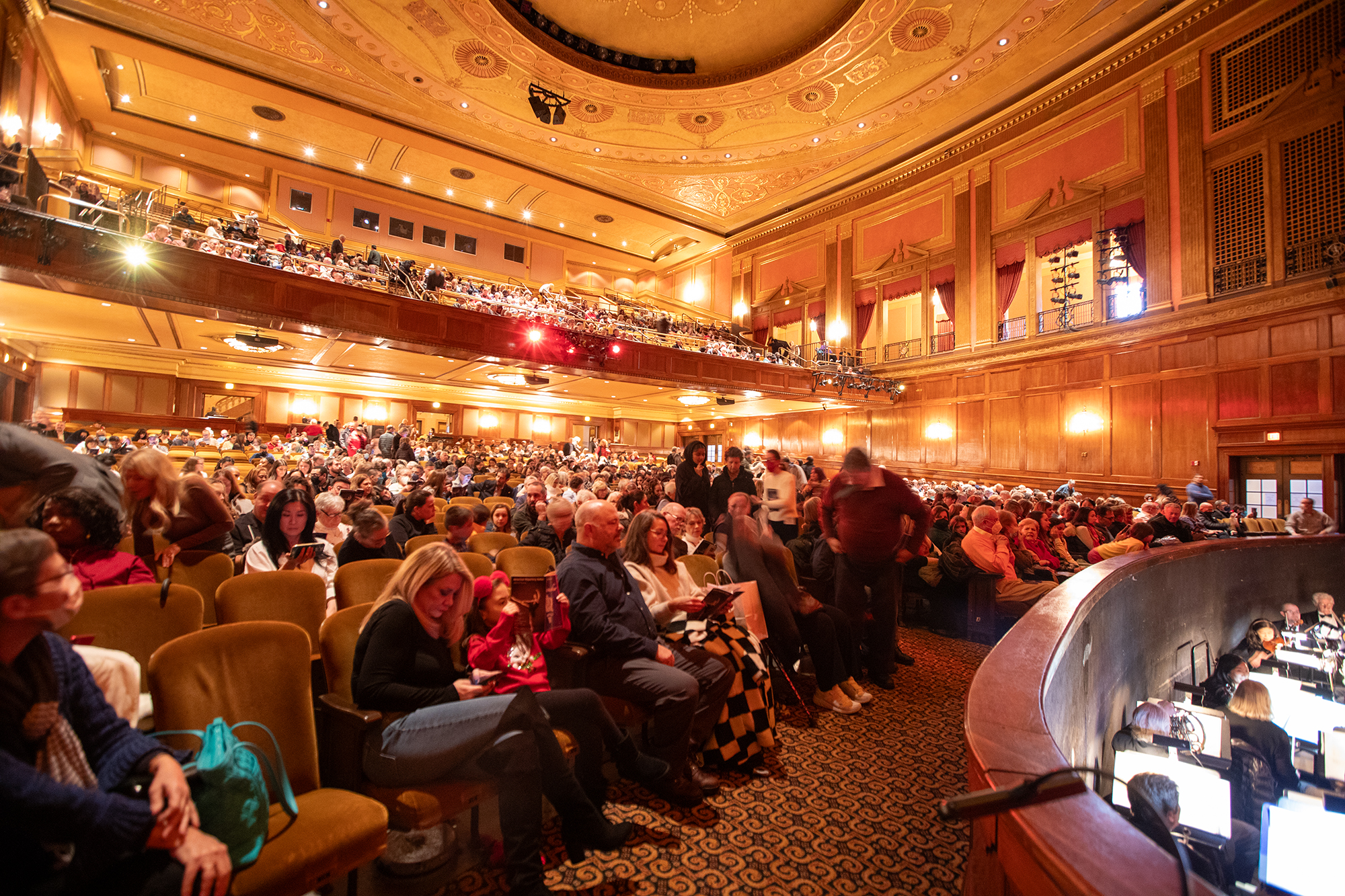
More than 65 musicians sit onstage, communicating without speaking, through breath, eye contact, gesture and sound. They listen and respond to one another and to the conductor, shaping every change in tempo, dynamics and style together in real time. That communication then flows outward to the audience, where more than a thousand people can share the same unfolding experience at precisely the same moment and respond in return through their attention, their applause and their bravos. Where else can so many people communicate so profoundly, without exchanging a single word?
For Jill Aguayo, Executive Director of the Capital Philharmonic of New Jersey, that moment represents something larger than music. It represents connection. It also represents continuity.
The Capital Philharmonic may be a relatively young organization, founded in 2013, but its roots reach back more than a century to 1921, when the Trenton Symphony was founded as New Jersey's first professional orchestra. Today, based at the historic Trenton War Memorial, CPNJ is carrying that legacy into a very different world, one filled with smartphones, streaming services and virtually unlimited entertainment available at the touch of a screen.
But CPNJ performs in a setting that itself reminds audiences of the enduring power of gathering together.
The Trenton War Memorial is one of the city's most magnificent and storied spaces. Built as a memorial to New Jersey's veterans, its grand architecture, elegant details and commanding performance hall create a sense of occasion before the first note is ever played. There is a scale and ceremony to the building that seems almost made for orchestral music. Inside its walls, history and performance come together. An audience is not simply listening to music; it is experiencing it in a place that carries its own powerful story.
For the Capital Philharmonic, the War Memorial provides a fitting connection between Trenton's past and its future. Centuries of musical tradition are brought to life by professional musicians in a building created to honor those who helped shape the nation, while a new generation of artists and audiences gathers beneath the same roof.
Aguayo believes that a sense of continuity matters.“Every era has its trends and fashions,” she says, “and we happen to be living through a particularly pivotal one.” Yet despite all the technological change, people are still drawn to the same thing they were drawn to in 1921: gathering together in a room to experience music performed live. “That says something important,” Aguayo says. “This isn't a passing trend. It's something enduring in us.”
Aguayo's own relationship with orchestral music began not in an executive office, but on stage.
She started her career as a classical flutist, performing with professional orchestras. During graduate school, she moved into artistic administration, working first with the San Francisco Symphony and later with the Metropolitan Opera. It was there that she discovered that she enjoyed the work behind the performance just as much as performing itself.There was satisfaction in supporting artists, building programs and helping create the circumstances that allow musicians to do their best work. Her experience as a musician also gave her something that continues to influence the way she leads CPNJ: an appreciation for what it takes to become—and remain—a professional musician.
It is not simply years of study. It is the discipline of continuing to practice, perform, prepare and grow. Having lived that life herself, Aguayo says she has a profound respect for the musicians who make up the Capital Philharmonic. That perspective is important because her vision for CPNJ isn't about preserving an institution behind glass. It is about keeping something extraordinary alive while allowing it to evolve.
For generations, attending the symphony could feel like an experience reserved for a particular social class. Aguayo sees today's orchestra differently.
The goal is to preserve the great masterworks while changing the way people encounter them.That means inviting people who may never have considered themselves classical music audiences. It means working with schools, local artists and community organizations. It means making tickets accessible. And it means programming music that reflects the increasingly diverse city around the orchestra.
One example is L'Hôtel Ritz Paris, a new composition by Vince di Mura that will bring a Cuban ensemble together with the orchestra. The point is not to abandon the classical tradition. It is to create a bridge into it.
Aguayo describes it as “meeting people where they are,” with the hope that audiences will discover something new and then carry that appreciation back into the broader orchestral repertoire.That philosophy is at the heart of CPNJ's current Composer-in-Residence initiative, A Bridge to Classical Music, funded through the New Jersey Economic Development Authority's A.R.T. Phase II grant.
The program is doing something particularly powerful: allowing Trenton residents to become part of the creative process rather than simply spectators. For Harmony Villa, three local choirs will participate, while di Mura has been working with students from Foundation Academy Collegiate to set text to music.Both Harmony Villa and L'Hôtel Ritz Paris will premiere at the Trenton War Memorial on October 24, 2026.
For students participating in the project, the experience goes far beyond attending a concert. They are helping create something that will be performed by a professional orchestra in their own city, in one of Trenton's most significant cultural spaces.
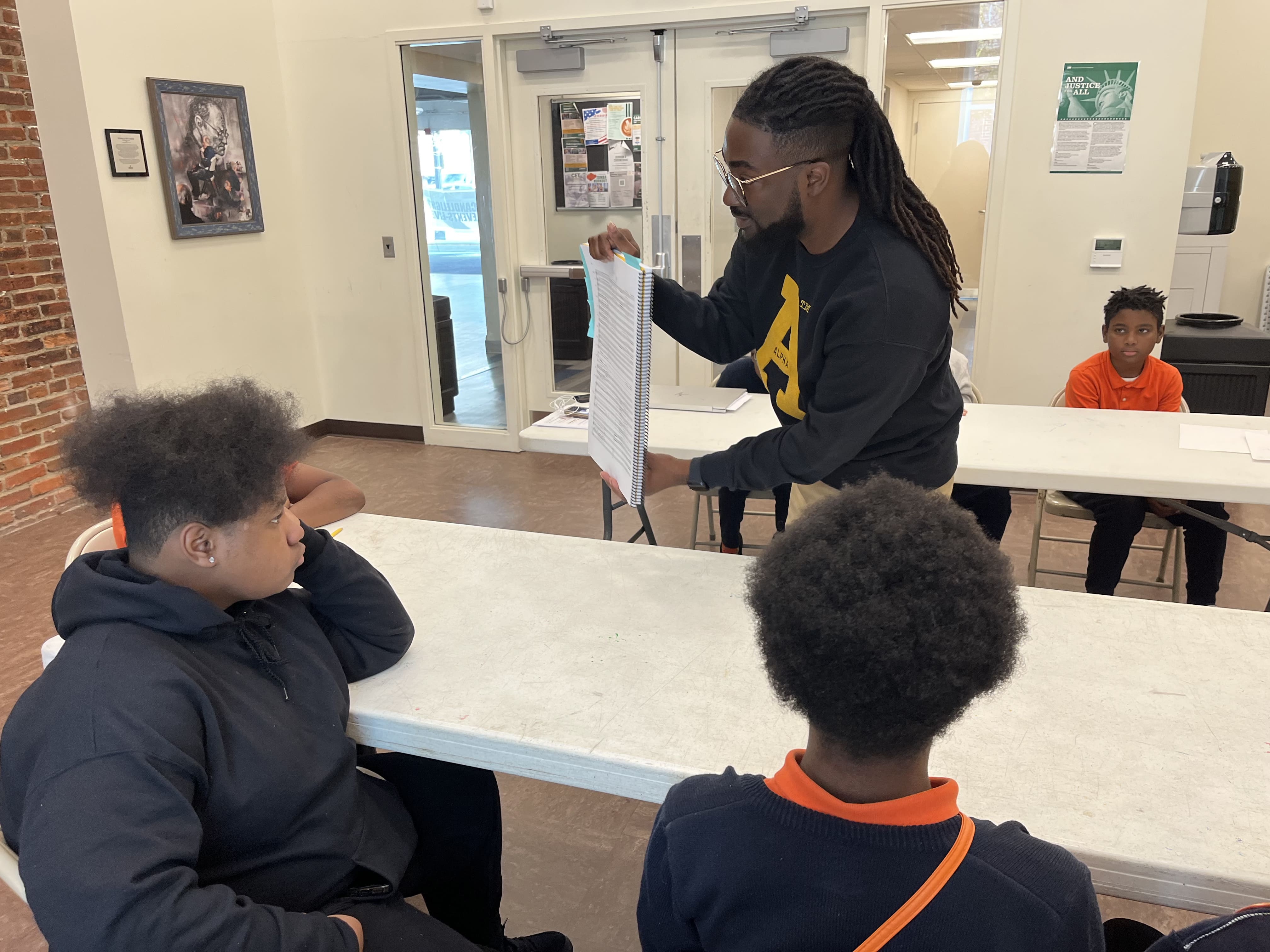
That same philosophy extends into the Young Composers Initiative.
For eight months, 10 high school students have been studying composition with CPNJ's Dr. Joel Phillips. On November 21, they will present their work during a public orchestra rehearsal at Foundation Academy's new campus auditorium.
For Aguayo, this is exactly the kind of opportunity that demonstrates why investing in an orchestra is about much more than what happens on a concert stage. A young person gets to work directly with professional musicians, write music, create something of their own and hear it performed by a full orchestra.
“What a unique opportunity!” Aguayo says. And that opportunity can have an impact far beyond the immediate experience.
The current NJEDA grant funding for the initiative ends in 2026, but CPNJ is already thinking about how to sustain the program. The challenge is not simply creating successful programs; it is finding the resources to make those programs part of the organization's long-term future.
That is where Aguayo's larger argument for the Philharmonic comes into play.
A symphony orchestra can be difficult to explain to someone who sees it simply as a series of concerts.
Aguayo sees the impact differently. When CPNJ brings musicians and conductors into Trenton schools, provides students and families with tickets, collaborates with local arts organizations and creates opportunities for young people to make music, the orchestra becomes part of a much larger ecosystem.
CPNJ has partnered with organizations including Foundation Academy, Sprout U School of the Arts, Artworks, Trenton Music Makers and the Trenton Circus Squad. This season, the Philharmonic will partner with the Capital Singers for a March concert.
The organization's Community Access Program also works with nonprofit organizations including The Father Center of New Jersey, Trenton Area Soup Kitchen and Big Brothers Big Sisters of Mercer County to provide access to performances.
Inside the War Memorial, the experience continues to expand beyond the orchestra itself. Local artists are featured in the lobby. Pre-concert talks give audiences a chance to better understand the music before they hear it. Those talks have become so popular that they sometimes reach standing-room-only capacity.
The intention is simple: make the experience personal. Make it less intimidating. Make people feel that the orchestra belongs to them, too.
Aguayo believes that funding the Capital Philharmonic is ultimately an investment in Trenton itself. It supports professional musicians and artists. It creates opportunities for young people. It strengthens relationships among cultural organizations. It brings people downtown. And it contributes to civic pride.
There is another reason the Philharmonic fits Trenton particularly well. Aguayo describes the city's artistic personality as authentic and genuine, a place where the art itself matters more than simply what is commercially popular.
From Passage Theatre to Artworks and the city's many other cultural organizations, she sees a creative community built around exploration, expression and meaningful work.That authenticity is part of what makes Trenton a natural home for a professional orchestra.
CPNJ connects the city to a great tradition of orchestral music, but it also has an opportunity to reflect the Trenton of today.
That means new audiences. New collaborations. New voices. And new music.
The arrival of Kyle Ritenauer as the Philharmonic's new Music Director is another important piece of that evolution. After two years without a permanent artistic leader, CPNJ sees Ritenauer as someone who understands both the traditions of orchestral music and the importance of making those traditions relevant to today's audiences.
For Aguayo, the future requires both. The great masterworks still matter. But so does the question of who is sitting in the audience, whose stories are being told and how the music connects to the community outside the concert hall.
Like virtually every performing arts organization, CPNJ faces a fundamental challenge: people's attention has never been more divided.
The pandemic disrupted the habit of attending concerts, while streaming entertainment has made it easier than ever to stay home. At the same time, producing professional live music continues to become more expensive. But Aguayo sees an opportunity hidden inside that challenge. People will eventually grow tired of digital entertainment and seek out more immersive experiences.
They may begin searching for something that cannot be streamed into a living room, the feeling of being in the same space with other people, experiencing something that exists only once, in that particular moment. She calls it the “live and authentic analog experience.” It may be that, in an increasingly digital world, the orchestra's greatest asset is the very thing that makes it impossible to replicate on a screen.
The musicians, the audience and the conductor are all communicating with each other in the same space and part of the same experience. There is absolutely nothing like it!
Aguayo's vision ultimately extends beyond the Philharmonic. She doesn't simply want CPNJ to become a stronger orchestra. She wants Trenton to become a thriving artistic hub, a vibrant, exciting place where people want to spend time. In her vision, a concert is not an isolated event.It is the centerpiece of a larger evening.
People come into Trenton for dinner. They explore the city's beautiful and historic places such as the Barracks Museum right up the street from the War Memorial. They experience the work of other artists and organizations. They discover restaurants, galleries, theaters and public spaces. They encounter a city that feels alive.
The Philharmonic becomes part of that journey. Not simply a place where people come to hear an orchestra, but one of the reasons they come to Trenton in the first place. That is perhaps the most compelling part of Aguayo's vision. She is not asking the city to preserve the past. She is asking it to build on it.
More than a century after Trenton first established a professional orchestra, the fundamental experience remains remarkably unchanged: people gathering together to listen to musicians create something extraordinary in real time. But everything around that experience can, and should, evolve.
For the Capital Philharmonic, the challenge is to make sure the doors are open wide enough for everyone to experience it.
And for Trenton, the opportunity is even greater.The orchestra can be more than a steward of musical history. It can be part of the sound of the city's future.
Purchase your season pass here: https://tickets.capitalphilharmonic.org/ticketing/capitalphil/catalog/subscriptions
The season kicks off on October 24!